<?xml version="1.0" encoding="utf-8"?><feed xmlns="http://www.w3.org/2005/Atom" ><generator uri="https://jekyllrb.com/" version="4.4.1">Jekyll</generator><link href="/feed.xml" rel="self" type="application/atom+xml" /><link href="/" rel="alternate" type="text/html" /><updated>2026-05-07T18:18:20+00:00</updated><id>/feed.xml</id><title type="html">Joshua T. Go</title><subtitle>&quot;Whatever is true, whatever is honorable, whatever is just, whatever is pure, whatever is lovely, whatever is commendable—if there is any moral excellence and if there is anything praiseworthy—dwell on these things.&quot;</subtitle><author><name>Joshua Go</name><email>joshuago@gmail.com</email></author><entry><title type="html">Modern Colors on Old Terminals</title><link href="/modern-colors-old-terminals/" rel="alternate" type="text/html" title="Modern Colors on Old Terminals" /><published>2026-02-27T00:00:00+00:00</published><updated>2026-02-27T00:00:00+00:00</updated><id>/modern-colors-old-terminals</id><content type="html" xml:base="/modern-colors-old-terminals/"><![CDATA[<ul id="markdown-toc">
  <li><a href="#screenshots" id="markdown-toc-screenshots">Screenshots</a></li>
  <li><a href="#the-xresources-file" id="markdown-toc-the-xresources-file">The Xresources File</a></li>
  <li><a href="#helpful-links" id="markdown-toc-helpful-links">Helpful Links</a></li>
</ul>

<p>I recently found myself tinkering with an old 32-bit x86 system that I
originally planned to e-waste. Not much runs on it, but I don’t need it to do a
whole lot: just run a terminal and the occasional web browser.</p>

<p>What I settled on, in terms of something that was usable and snappy enough, was
to run Debian 12 with <a href="https://www.windowmaker.org/">WindowMaker</a> on it. It
doesn’t do much, but then again, I don’t need it to do much.</p>

<p>The default old-school terminal apps I eventually settled on, <code class="language-plaintext highlighter-rouge">xterm</code> and
<code class="language-plaintext highlighter-rouge">rxvt-unicode</code>, looked really dated with the default settings. I was ready for
nostalgia, but maybe not that ready.</p>

<p>I set about trying to have them look and feel more modern. After some research,
tinkering, and real usage, I arrived at something that I thought was worth
saving. Here are some screenshots and the <code class="language-plaintext highlighter-rouge">.Xresources</code> file.</p>

<p>These run with WindowMaker and no desktop environment overhead. Even running
<a href="https://opencode.ai/">OpenCode</a> is pretty pleasant, as long as I’m logged in
to a more powerful remote machine.</p>

<h3 id="screenshots">Screenshots</h3>

<p>Here’s <a href="https://invisible-island.net/xterm/">xterm</a>:</p>

<p><img src="/assets/xterm-screenshot.png" alt="xterm with a modern color scheme" /></p>

<p>And here’s <a href="https://software.schmorp.de/pkg/rxvt-unicode.html">rxvt-unicode</a> (urxvt):</p>

<p><img src="/assets/urxvt-screenshot.png" alt="rxvt-unicode with a modern color scheme" /></p>

<p>I’m a fan of those NeXT-style scrollbars on rxvt.</p>

<h3 id="the-xresources-file">The Xresources File</h3>

<p>Without further ado, here’s the <code class="language-plaintext highlighter-rouge">.Xresources</code> file:</p>

<div class="language-plaintext highlighter-rouge"><div class="highlight"><pre class="highlight"><code>URxvt.font: xft:JetBrains Mono:size=14:antialias=true
URxvt.foreground: #ffffff
URxvt.background: #090300
URxvt.cursorColor: #ffffff
URxvt.pointerColor: #1a1a1a
URxvt.scrollBar: true
URxvt.scrollBar_right: true
URxvt.saveLines: 10000
URxvt.scrollstyle: next

XTerm*faceName: JetBrains Mono
XTerm*faceSize: 14
XTerm*foreground: #ffffff
XTerm*background: #090300
XTerm*cursorColor: #ffffff
XTerm*pointerColor: #1a1a1a
XTerm*scrollBar: true
XTerm*rightScrollBar: true
XTerm*saveLines: 10000


! black
URxvt.color0:  #090300
URxvt.color8:  #5c5855
XTerm*color0:  #090300
XTerm*color8:  #5c5855

! red
URxvt.color1:  #ff6e5e
URxvt.color9:  #ff6e5e
XTerm*color1:  #ff6e5e
XTerm*color9:  #ff6e5e

! green
URxvt.color2:  #01a252
URxvt.color10: #01a252
XTerm*color2:  #01a252
XTerm*color10: #01a252

! yellow
URxvt.color3:  #ffc805
URxvt.color11: #ffc805
XTerm*color3:  #ffc805
XTerm*color11: #ffc805

! blue
URxvt.color4:  #2cbbf4
URxvt.color12: #2cbbf4
XTerm*color4:  #2cbbf4
XTerm*color12: #2cbbf4

! magenta
URxvt.color5:  #e965cf
URxvt.color13: #e965cf
XTerm*color5:  #e965cf
XTerm*color13: #e965cf

! cyan
URxvt.color6:  #b5e4f4
URxvt.color14: #b5e4f4
XTerm*color6:  #b5e4f4
XTerm*color14: #b5e4f4

! white
URxvt.color7:  #a5a2a2
URxvt.color15: #f7f7f7
XTerm*color7:  #a5a2a2
XTerm*color15: #f7f7f7
</code></pre></div></div>

<p>The asterisks are there for the <code class="language-plaintext highlighter-rouge">XTerm</code> entries because apparently
<code class="language-plaintext highlighter-rouge">rxvt-unicode</code> doesn’t heavily utilize nested components, while <code class="language-plaintext highlighter-rouge">xterm</code> does.</p>

<h3 id="helpful-links">Helpful Links</h3>

<p>Here are some sites I encountered along the way that kept my motivation up and
might inspire future improvements:</p>

<ul>
  <li><a href="https://addy-dclxvi.github.io/post/configuring-urxvt/">Configuring URxvt to Make It Usable and Less Ugly</a></li>
  <li><a href="https://terminal.sexy/">terminal.sexy</a></li>
</ul>]]></content><author><name>Joshua Go</name><email>joshuago@gmail.com</email></author><summary type="html"><![CDATA[A default Xresources configuration for running on plain old xterm and rxvt-unicode.]]></summary></entry><entry><title type="html">How I Plan Work: Two-Week Kanban</title><link href="/two-week-kanban/" rel="alternate" type="text/html" title="How I Plan Work: Two-Week Kanban" /><published>2025-09-03T00:00:00+00:00</published><updated>2025-09-03T00:00:00+00:00</updated><id>/two-week-kanban</id><content type="html" xml:base="/two-week-kanban/"><![CDATA[<p>Scrum has real overhead. Daily standups, story pointing, sprint planning,
and retrospectives add up to hours each week that could be spent building.</p>

<p>Sprint boundaries also add friction. If a priority shifts on a Wednesday, the
team still waits for the next sprint to start. In practice, we adjust the
backlog mid-cycle constantly. New work comes in and old work gets bumped. This
is especially true on operational teams, where incoming requests don’t respect
sprint boundaries. It undermines the point of locking the sprint down.</p>

<p>I kept the alignment and accountability and dropped the rest: a single Kanban
board (To Do, In Progress, Done) governs the flow. Work enters when it’s ready
and leaves when it’s finished.</p>

<p>I also limit work in progress per person as a forcing function: people finish
what they start instead of scattering effort across half a dozen half-done
items, and the cap pushes work to the finish line instead of letting it pile
up mid-stream.</p>

<p>The only fixed meeting is a 30-minute review every two weeks.</p>

<p>We answer three questions:</p>

<ol>
  <li>What shipped?</li>
  <li>What should ship next?</li>
  <li>Has anything in the outside world changed enough that we should pivot?</li>
</ol>

<p>Then we reorder the board and get back to work.</p>

<p>The two-week cadence keeps the process light and gives the team enough room to
think.</p>

<p>The board is visible to everyone, so few things come as a surprise. If a
customer emergency lands on a Thursday we pull it straight into In Progress and
eject something else. No round of approval meetings required.</p>

<p>That’s the whole system. A board, a WIP cap, and a 30-minute check-in every two
weeks. It’s not much, but it’s held up across multiple teams.</p>]]></content><author><name>Joshua Go</name><email>joshuago@gmail.com</email></author><summary type="html"><![CDATA[This is how I keep a team organized while minimizing the time, energy, and initiative that get sapped by ceremony.]]></summary></entry><entry><title type="html">Digging Holes in the Sand</title><link href="/digging-holes-in-the-sand/" rel="alternate" type="text/html" title="Digging Holes in the Sand" /><published>2021-08-29T00:00:00+00:00</published><updated>2021-08-29T00:00:00+00:00</updated><id>/digging-holes-in-the-sand</id><content type="html" xml:base="/digging-holes-in-the-sand/"><![CDATA[<p>This summer, my two boys and I discovered a new favorite activity for our beach
days: digging holes. There’s something really satisfying about moving that
sand, feeling its weight, and watching the visible progress as you bend the
landscape to your will.</p>

<p>To get started, we needed to get some depth quickly to build some momentum for
our efforts. Caleb (7) figured out a nice system to divide up our labor. We
worked diligently to move buckets and made excellent progress as we focused
narrowly on making the hole as deep as we could.</p>

<p>Declan (6) saw the progress and got excited, and wanted to help. Caleb got
excited too. At some point all the digging stopped and the focus of attention
turned to running around the hole and making noise. After all, what are beach
days for but fun? Who could fault children for wanting to play in between bouts
of digging?</p>

<p><img src="/assets/manhattan-beach.png" alt="Manhattan Beach" /></p>

<p>With all the excitement and play around this focus of attention, it
wasn’t long before this hole in the sand that was getting nice and deep
suddenly collapsed in on itself from the sides.</p>

<p>Caleb and I, who were very invested and focused on the task at hand, looked at
the collapsed hole in shock. It was the feeling of a lot of progress, seemingly
gone.</p>

<p>The beach has a way of calming us, of relaxing us. And so I turned anew to our
greater, original purpose: we were at the beach to have fun. To chill out,
dude. There’s no sense getting upset over kids being kids. Might as well put it
behind us and get along again.</p>

<p>So, with renewed cheer, we got back to work, accepting that half our progress
had been erased and we’d just have to start over. After a few scoops of the
bucket, this hole in the sand was again looking to be on track.</p>

<p>What I later realized was that the accidental collapse from the side
<em>broadened</em> the hole we were digging. And the sand that fell in, while
appearing to set our progress back, was already loose and actually pretty
trivial to scoop back out. It wasn’t at all like the effort involved in
scraping up the tightly packed sand during our initial dig.</p>

<p>In the end, the accidental collapse from the side made the hole bigger, which
gave us what we really wanted: a huge hole in the sand.</p>

<p>We originally wanted to dig a hole so that one kid could jump in there. What we
ended up with instead was a hole that could fit all three of us.</p>

<p>Setbacks are frustrating when they’re fresh. In our case, it felt like our work
was wasted and we were forced to start over. But we kept at it, and when we
were done, what first seemed like a setback turned out to make the end result
even better.</p>]]></content><author><name>Joshua Go</name><email>joshuago@gmail.com</email></author><summary type="html"><![CDATA[Lessons from digging holes at a beach with my kids.]]></summary></entry><entry><title type="html">Designing the Perfect Planner</title><link href="/designing-the-perfect-planner/" rel="alternate" type="text/html" title="Designing the Perfect Planner" /><published>2019-09-19T00:00:00+00:00</published><updated>2019-09-19T00:00:00+00:00</updated><id>/designing-the-perfect-planner</id><content type="html" xml:base="/designing-the-perfect-planner/"><![CDATA[<p>I’m one of those people who tracks and plans things with a paper planner.</p>

<p>For many years, I used the Mead Upper Class weekly/monthly academic planner. It
was great when I was in school, and it fit my needs so well that I continued to
use it even after I entered the workforce.</p>

<p>Here’s what made it great:</p>

<ul>
  <li>
    <p><em>Tough binding.</em> Not flimsy metal spiral binding. This made it great for
throwing into a backpack where it survived being twisted and compressed in
all sorts of ways.</p>
  </li>
  <li>
    <p><em>Great paper quality.</em> This kept gel ink pens from bleeding through the
pages.</p>
  </li>
  <li>
    <p><em>Tough plastic cover.</em> This also made it great for surviving the twisting and
compressing in a backpack.</p>
  </li>
  <li>
    <p><em>Weekly layout, with daily view.</em> This fit my workflow very well, where I’d
plan each day’s tasks and want to focus, but have a little flexibility to
kick items later in the week if it didn’t look like I’d plausibly fit
something into the current day.</p>
  </li>
  <li>
    <p><em>Room for slower weekends as part of daily view.</em> This was a very nice,
thoughtful touch.</p>
  </li>
  <li>
    <p><em>Previous/next month visibility right in the weekly view.</em></p>
  </li>
</ul>

<p>In 2015 (?) Mead changed the layout so that it was much narrower. I liked it so much over the years that I gave it a try, but to no avail.</p>

<p>A friend gave me a spare Field Notes planner with the same layout. I tried to
go with a smaller version of the Mead Upper Class. I even tried to get into
<a href="https://bulletjournal.com/">bullet journaling</a> for some time, but didn’t want
the overhead of creating the scaffolding around my day in addition to planning
my actual day. (I’ll mention that I appreciate the part of bullet journaling
where you manually have to write out what you didn’t get done in previous days
in order to really <em>feel</em> and call out the fact that <em>maybe</em> you should figure
out what to do with an item besides just postponing it.)</p>

<p>These days, I’m just going with the Blue Sky planner. But even that has
shortcomings. What I’d like to see in a planner, if I were to design one from
scratch to meet exactly my needs, would have the following qualities:</p>

<ul>
  <li>
    <p><em>Cover the actual year, not the academic year.</em></p>
  </li>
  <li>
    <p><em>Kill the reference material at the back.</em> That was handy in school, but
I never look at that now that I’m working. I will never need a list of state
capitals when I’m in a budget meeting.</p>
  </li>
  <li>
    <p><em>Give me an easy way to capture loose notes.</em> Not everything should be a
line item on my to-do list, but there’s stuff I think of that I’d like to peg
to a given date so I have some context. Sticky notes might work if they’re
infrequent enough.</p>
  </li>
  <li>
    <p><em>Better color selection.</em> Lime green, baby blue, and gray are my choices
right now with the smaller version of the Mead Upper Class. I like to
alternate colors between years and sometimes keep the previous year’s planner
around for a few weeks while I transition to the new planner, so it’d be
handy to be able to tell, at a glance, which of the two is which.</p>
  </li>
</ul>]]></content><author><name>Joshua Go</name><email>joshuago@gmail.com</email></author><summary type="html"><![CDATA[A writeup about my favorite paper planner and how I'd improve it further.]]></summary></entry><entry><title type="html">Placeholder Post</title><link href="/placeholder-post/" rel="alternate" type="text/html" title="Placeholder Post" /><published>2019-07-27T00:00:00+00:00</published><updated>2019-07-27T00:00:00+00:00</updated><id>/placeholder-post</id><content type="html" xml:base="/placeholder-post/"><![CDATA[<p>This is a placeholder post. You know, to hold the place for future posts.</p>

<p>There’s even syntax highlighting for code samples. Neat.</p>

<div class="language-ruby highlighter-rouge"><div class="highlight"><pre class="highlight"><code><span class="c1"># Headers</span>
<span class="n">res</span><span class="p">[</span><span class="s1">'Set-Cookie'</span><span class="p">]</span>            <span class="c1"># =&gt; String</span>
<span class="n">res</span><span class="p">.</span><span class="nf">get_fields</span><span class="p">(</span><span class="s1">'set-cookie'</span><span class="p">)</span> <span class="c1"># =&gt; Array</span>
<span class="n">res</span><span class="p">.</span><span class="nf">to_hash</span><span class="p">[</span><span class="s1">'set-cookie'</span><span class="p">]</span>    <span class="c1"># =&gt; Array</span>
<span class="nb">puts</span> <span class="s2">"Headers: </span><span class="si">#{</span><span class="n">res</span><span class="p">.</span><span class="nf">to_hash</span><span class="p">.</span><span class="nf">inspect</span><span class="si">}</span><span class="s2">"</span>
</code></pre></div></div>

<p>This is where an opinionated hot take might begin. Maybe I’ll get to it
someday. Static websites are pretty cool. They take a lot of the worries out of
the process, I’ll tell you that much. When you don’t have to worry about
building and maintaining dynamic websites, you’re freed up to focus on the
content. Or think about other crazy things, or just tinker with different ways
to generate your own unique identifiers like <code class="language-plaintext highlighter-rouge">9kQr9bN</code>.</p>

<p>How about images?</p>

<p><img src="/assets/CcMJAxY.png" alt="My helpful screenshot" /></p>

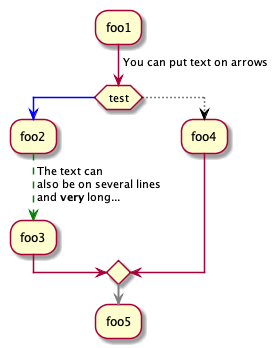
<p>Neat! Now how about a PlantUML diagram?</p>

<p><img src="/assets/DhmPPp6.png" alt="Neato diagram" /></p>

<p>And tables. We really can’t forget about the presentation of tabular data.</p>

<table>
  <thead>
    <tr>
      <th>Project Name</th>
      <th>Business Value (1-5)</th>
      <th>Difficulty (1-5)</th>
    </tr>
  </thead>
  <tbody>
    <tr>
      <td>Burrito</td>
      <td>3</td>
      <td>4</td>
    </tr>
    <tr>
      <td>Enchilada</td>
      <td>1</td>
      <td>2</td>
    </tr>
    <tr>
      <td>Sope</td>
      <td>5</td>
      <td>1</td>
    </tr>
  </tbody>
</table>

<hr />

<h2 id="math-formatting-examples">Math Formatting Examples</h2>

<p>Here are a few varied samples of what MathJax can render.</p>

<p><strong>Triple integral (volume of a sphere):</strong></p>

\[\iiint_V dV
= \int_0^{2\pi} \int_0^\pi \int_0^R r^2 \sin\phi \, dr \, d\phi \, d\theta
= \frac{4}{3} \pi R^3\]

<p><strong>Piecewise function:</strong></p>

\[f(x) = \begin{cases}
x^2,     &amp; x \geq 0 \\
-x^2,    &amp; x &lt; 0
\end{cases}\]

<p><strong>Matrix with inline reference:</strong></p>

<p>The inertia tensor $\mathbf{I}$ for a rigid body is a $3 \times 3$ matrix:</p>

\[\mathbf{I} = \begin{pmatrix}
I_{xx} &amp; I_{xy} &amp; I_{xz} \\
I_{yx} &amp; I_{yy} &amp; I_{yz} \\
I_{zx} &amp; I_{zy} &amp; I_{zz}
\end{pmatrix}\]

<p>where $I_{xx} = \sum_i m_i (y_i^2 + z_i^2)$ and so on.</p>

<p><strong>Summation identity:</strong></p>

\[\sum_{k=1}^n k^3 = \left( \sum_{k=1}^n k \right)^2 = \frac{n^2 (n+1)^2}{4}\]

<p><strong>Inline delimiters that scale:</strong></p>

\[\left( \frac{1}{1 + \frac{1}{x}} \right)^{\!n}
\quad\text{vs}\quad
\left[ \int_0^\infty e^{-t^2} dt \right]^2\]]]></content><author><name>Joshua Go</name><email>joshuago@gmail.com</email></author><summary type="html"><![CDATA[This is a placeholder post. You know, to hold the place for future posts.]]></summary></entry><entry><title type="html">Important Lessons From Teachers</title><link href="/important-lessons-from-teachers/" rel="alternate" type="text/html" title="Important Lessons From Teachers" /><published>2011-10-08T00:00:00+00:00</published><updated>2011-10-08T00:00:00+00:00</updated><id>/important-lessons-from-teachers</id><content type="html" xml:base="/important-lessons-from-teachers/"><![CDATA[<p>I encountered a great article the other day about <a href="http://blogs.plos.org/neurotribes/2011/10/05/whats-the-most-important-lesson-you-learned-from-a-teacher/">the most important thing
various people learned from their
teachers</a>.</p>

<p>What really struck me was how closely my own experiences mirrored those of the
people who wrote in.</p>

<h3 id="randomness-of-inspiration">Randomness of inspiration</h3>

<p>Rebecca Skloot:</p>

<blockquote>
  <p>An amazing thing about classrooms: You never know what random sentence from a
teacher will change a student’s life.</p>
</blockquote>

<h3 id="close-reading-as-a-skill">Close reading as a skill</h3>

<p>Mark Dery:</p>

<blockquote>
  <p>The endorphin buzz of hitting the interpretive bull’s-eye, making her eyes
light up with that <em>you-got-it!</em> glow of approval, struck sparks in my
teenage mind. My year with her inspired a lifetime habit of overthinking
everything, a gift that keeps on giving.</p>
</blockquote>

<p>Same here. It was my junior year of high school and I took an honors-level
course in American Literature.</p>

<h3 id="cross-disciplinary-insights-as-unexplored-gold-mines-of-knowledge">Cross-disciplinary insights as unexplored gold mines of knowledge</h3>

<p>Nicola Twilley:</p>

<blockquote>
  <p>Call me slow, but it was the first time that I’d been introduced to the
incredibly fertile, idea-rich, and under-explored territory created by
crossing disciplines.</p>
</blockquote>

<p>I learned the same lesson sitting in a sociology class in college.</p>

<h3 id="natural-aptitude-is-not-enough">Natural aptitude is not enough</h3>

<p>Hillary Rosner:</p>

<blockquote>
  <p>Later, when he read a draft of my college admissions essay, I was crushed
when he said it was trite and needed work. Writing had always come easily to
me, and I’d learned to get by with minimal effort. Mr. Willey taught me that
having a natural aptitude for something means you have to work even harder at
it — because otherwise what’s the point?</p>
</blockquote>

<p>I pulled the same thing in a college English class.</p>

<h3 id="the-worth-of-unloved-overloaded-words">The worth of unloved, overloaded words</h3>

<p>Joe Kloc:</p>

<blockquote>
  <p>I left that class with the understanding that words — their religious,
historical or scientific baggage aside — are ultimately human inventions,
created to articulate our experiences. In dismissing words too quickly, we
run the risk of losing the language that affords us the ability to comprehend
ourselves. I came to see why “Amazing Grace” is still a song worth singing
through a secular life.</p>
</blockquote>

<p>My personal favorite is “synergy.”</p>

<h3 id="reliable-sources">Reliable sources</h3>

<p>Uta Firth:</p>

<blockquote>
  <p>It occurred to me that you must always have precise sources for what you
believe to be true — and be able to quote them at the right moment. The word
of a trusted authority, even the greatest authority, is subject to scrutiny.</p>
</blockquote>

<p>I don’t remember when or whether I learned this from a teacher, but it’s
certainly one worth remembering in our fast-moving, tweet-from-the-hip culture.</p>]]></content><author><name>Joshua Go</name><email>joshuago@gmail.com</email></author><summary type="html"><![CDATA[People write in about the most important lessons they learned from past teachers. Here are the highlights, and here's my take.]]></summary></entry><entry><title type="html">Resurfacing Content Lost in the Stream</title><link href="/resurfacing-content-lost-in-the-stream/" rel="alternate" type="text/html" title="Resurfacing Content Lost in the Stream" /><published>2010-02-22T00:00:00+00:00</published><updated>2010-02-22T00:00:00+00:00</updated><id>/resurfacing-content-lost-in-the-stream</id><content type="html" xml:base="/resurfacing-content-lost-in-the-stream/"><![CDATA[<p>My information sources are stream-based. Anything good quickly gets pushed down
as new stuff appears on top. If I don’t check the stream for a couple of days,
I miss out on good things which have since been buried. If I want to go looking
for them, I have to go digging backwards in the stream.</p>

<p>Not all streams are created equal, but they all present me with the problem of
eventually having old stuff that I would like to get to later on. Whether I
choose the contents of the stream myself or whether others populate its
contents for me, whether it’s strictly chronological (newest first) or whether
the top rankings incorporate some aspect of effectiveness or popularity, the
problem is that old but good stuff gets buried. Of course, streams are fun
because they give us what’s new and interesting. The last thing we want is to
keep the old stuff around where we expect the new stuff to be.</p>

<p>As it is, the only option available to me today is to start making my way
through the older items in the stream to look for good content. What if there
were a better way?</p>

<p>The solution for this would probably look different depending on the nature of
the stream I find myself having to pick through.</p>

<p>With my own Delicious bookmarks, whatever I saved has already received my stamp
of approval. It was interesting enough to warrant my saving it. On top of that,
the tagging system lets me narrow my search for old stuff so that I don’t have
to pick through everything. When older items are segmented in any way, the
problem of resurfacing older content is made easier to solve. Everything in the
stream has already been judged, by my standards, to be good. The only thing
left to do is to call it back up.</p>

<p>With streams such as <a href="https://thebrowser.com">The Browser</a> or <a href="https://news.ycombinator.com">Hacker
News</a>, the items are for narrow subjects and are
likely, though not guaranteed, to garner my interest and attention. Sometimes,
slightly older items will stay up longer because they’ve been deemed to be of
high enough quality to justify keeping them around for a little longer. To
resurface old content on these sites, I’d have to resort to looking through the
older items manually, but it wouldn’t be so bad because the stream is dense
with interesting and relevant articles.</p>

<p>Does the answer lie in curation? Or can we automate the resurfacing process
somehow?</p>

<p>In a way, this is a problem we’ve had even before the Internet was around. The
difference is that the great classical works of old were part of a standard
curriculum and digging them up just meant exposing them to a new generation.
With the advent of the long tail, our interests have become fragmented. Add to
this the explosion of available information and the new problem of picking
through it for the gems.</p>]]></content><author><name>Joshua Go</name><email>joshuago@gmail.com</email></author><summary type="html"><![CDATA[My information sources are stream-based. Anything good quickly gets pushed down as new stuff appears on top. If I don’t check the stream for a couple of days, I miss out on good things which have since been buried. If I want to go looking for them, I have to go digging backwards in the stream.]]></summary></entry><entry><title type="html">The Trouble With Budget Surpluses</title><link href="/the-trouble-with-budget-surpluses/" rel="alternate" type="text/html" title="The Trouble With Budget Surpluses" /><published>2008-12-23T00:00:00+00:00</published><updated>2008-12-23T00:00:00+00:00</updated><id>/the-trouble-with-budget-surpluses</id><content type="html" xml:base="/the-trouble-with-budget-surpluses/"><![CDATA[<p>The trouble with a government (or any big organization) running a budget
surplus and hoarding a big pile of cash is that people start asking questions
like, “Why don’t we do something with all that money, especially when there’s
so much to fix?”</p>

<p>At government scale, having cash for a rainy day is not an excuse people will
generally accept, particularly when the figure is quoted in terms of billions
of dollars.</p>

<p>Currently, we’re suffering the effects of not being watchful over the public
purse. In hindsight, it’s easy and obvious to rail against profligacy in our
budgets. What I’m proposing for the next time around is something that can help
us avoid this same problem in the future.</p>

<p>We’ve been told that it’s wise to save up for the future, to have some cash on
hand just in case – folk wisdom that was reinforced by the big collapses in
the years following 2008. Intuitively, it makes sense that most people would
find it conceptually difficult to hear about a surplus in the billions of
dollars without wanting to spend it on something.</p>

<p>If an even moderately sized government were wise and careful in its spending,
it would quickly accumulate a large surplus. That large surplus would then get
people dreaming about capital improvements, social services, and other goodies
that drain the public purse.</p>

<p>Those who advocate for smaller governments would say that the problem could be
solved by striking the problem at the root – shrinking the government and
therefore its potential to accumulate large sums of money. But large pools of
capital have undeniable advantages.</p>

<p>Whether by conscious choice or mere political expediency a large government
must stay large, it would do well to quote the figures based on the population
of the governed – that is, on a per-person basis.</p>

<p>This would make billion-dollar surpluses more acceptable to voters, and give us
a more readily grasped, more accurate picture of our government’s fiscal
health.</p>]]></content><author><name>Joshua Go</name><email>joshuago@gmail.com</email></author><summary type="html"><![CDATA[It would be more effective for governments to quote financial figures in per-person terms.]]></summary></entry></feed>